Website speed is no longer a luxury—it’s a necessity. Google considers page loading speed a ranking factor, and users expect a site to load in under three seconds. Whether you’re running a personal blog, an eCommerce store, or a business website, slow load times can kill conversions and search rankings.
That’s where Hosting with Integrated CDN Free options come into play. Instead of relying solely on your hosting server, a Content Delivery Network (CDN) distributes your content across multiple global servers. When visitors access your site, they’re automatically served content from the server closest to them, reducing latency and ensuring a faster experience.
The best part? Many hosting companies now provide Hosting with Integrated CDN Free in their plans—meaning you don’t have to spend extra on performance optimization or complex setup. In this guide, we’ll explore the best WordPress hosting providers offering free CDN integration, their benefits, and how to choose the right one for your website.
What Is a CDN?
A CDN is essential, especially when paired with Hosting with Integrated CDN Free, as it ensures your website’s assets load quickly regardless of visitor location.
Benefits of Using a CDN
Choosing Hosting with Integrated CDN Free not only improves site speed but also strengthens SEO performance and reduces server load.
WordPress Hosts with a Free CDN
When comparing the best WordPress hosts, prioritize those that offer Hosting with Integrated CDN Free. These solutions combine global performance and affordability, helping your site load instantly for users anywhere in the world.
1. Bluehost
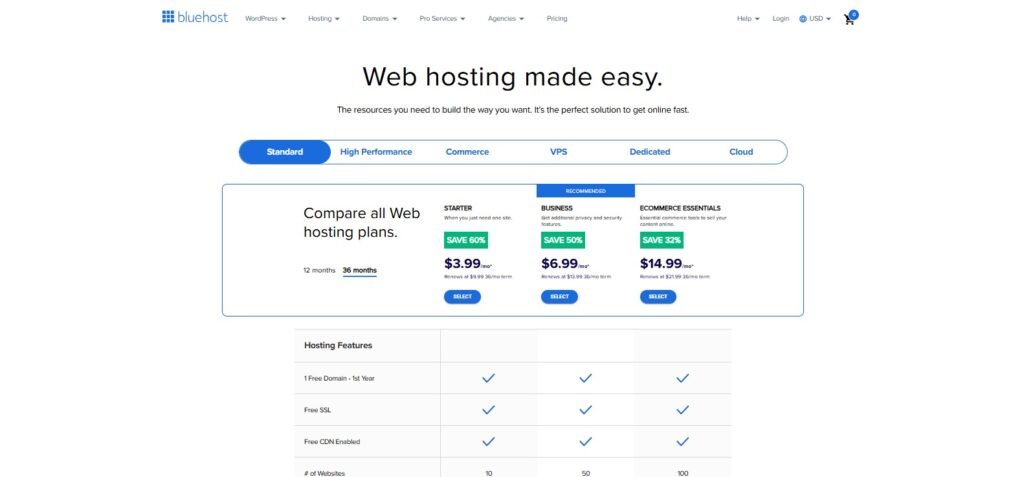
Bluehost is one of the most beginner-friendly WordPress hosting companies, officially recommended by WordPress.org. One of its standout features is the integration with Cloudflare CDN, included for free in all plans.
Key Advantages:
One-click CDN activation: No need for complicated technical setup. Simply enable Cloudflare from your dashboard.
Improved security: Built-in DDoS protection ensures your site stays online even during high-traffic attacks.
Global reach: Cloudflare’s expansive network ensures faster load times worldwide.
Affordable pricing: Plans start at budget-friendly rates, making Bluehost ideal for beginners and small businesses.
Best For: Bloggers, small businesses, and startups looking for reliable hosting with affordable free CDN integration.
2. SiteGround
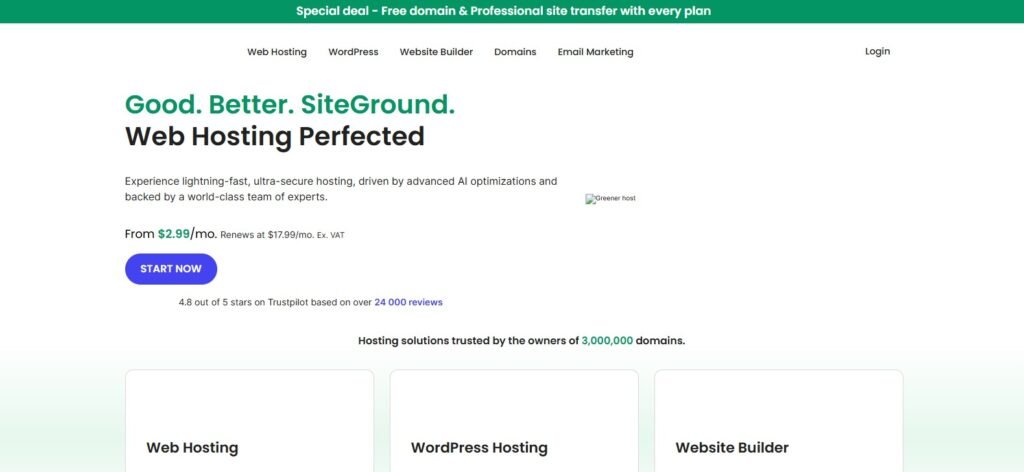
SiteGround is a standout choice for those seeking Hosting with Integrated CDN Free, thanks to its in-house SiteGround CDN optimized for WordPress.
Key Advantages:
Custom CDN integration: Designed in-house for seamless WordPress optimization.
Built-in caching: SiteGround combines CDN with advanced caching technologies for maximum speed.
Security benefits: Your site gains an extra layer of protection with encrypted connections.
Data centers worldwide: Ensures your site is fast whether your visitors are in the US, Europe, or Asia.
Best For: Website owners who want all-in-one performance and security features without relying on third-party solutions.
3. WP Engine: Best Premium Host

If you’re running a mission-critical website, WP Engine is one of the best premium hosting providers in the market. It’s designed specifically for WordPress and comes with built-in CDN powered by Cloudflare Enterprise.
Key Advantages:
Enterprise CDN: Delivers unmatched speed and reliability compared to standard Cloudflare.
Automatic scaling: Handles sudden traffic spikes effortlessly.
Developer-friendly tools: Offers staging environments, Git integration, and advanced analytics.
SEO advantages: Faster sites directly boost search engine rankings.
Best For: Established businesses, eCommerce sites, and agencies that need top-tier performance and premium CDN integration.
4. Cloudways: Best Cloud Host
Cloudways delivers managed cloud hosting with flexible scalability and Hosting with Integrated CDN Free, powered by Cloudflare’s global network.
Key Advantages:
Flexible hosting: Choose your cloud provider and scale resources as needed.
Pay-as-you-go pricing: Only pay for what you use.
Performance-focused: Optimized stack with NGINX, Varnish, and Redis caching.
Global CDN support: Cloudflare ensures lightning-fast content delivery worldwide.
Best For: Tech-savvy users, developers, and agencies who want scalable hosting with integrated free CDN support.
5. GoDaddy: Best for Domains

GoDaddy is the world’s largest domain registrar, but it has also become a major player in the hosting space. One of the best parts about GoDaddy’s managed WordPress hosting is the built-in CDN powered by Cloudflare, available at no additional cost.
Key Advantages:
Integrated with domains: If you already purchased your domain from GoDaddy, managing hosting and CDN together is seamless.
Global edge servers: Cloudflare ensures content delivery from 200+ data centers worldwide.
Security features: The free CDN includes a Web Application Firewall (WAF) and DDoS protection.
24/7 customer support: GoDaddy’s massive support team makes troubleshooting easy for beginners.
Best For: Beginners and small businesses who prefer everything (domain + hosting + CDN) under one roof without juggling multiple providers.
6. Bluehost.com
Although Bluehost was already mentioned earlier, it deserves a separate spotlight because of its direct website integration. When you host through Bluehost.com (the main portal, not reseller channels), you get Cloudflare CDN pre-enabled inside the hosting control panel.
Key Advantages:
Automatic activation: No need for separate DNS or account setup — everything works from the hosting dashboard.
Beginner-friendly interface: Bluehost.com simplifies CDN usage so you don’t have to worry about technical complexities.
Performance boost: With caching, SSL, and CDN all bundled, your WordPress site runs faster with minimal effort.
Budget plans: Ideal for those starting with shared hosting and planning to scale later.
Best For: First-time website owners who want the easiest free CDN setup without technical headaches.
7. Hostinger.com
Hostinger has gained massive popularity in recent years because of its low-cost hosting with premium features. One of those features is a free CDN included in most of its plans, making it a strong competitor in the budget hosting market.
Key Advantages:
LiteSpeed + CDN combo: Hostinger uses LiteSpeed servers combined with Cloudflare CDN, giving exceptional speed even on entry-level plans.
Global coverage: Cloudflare’s wide network ensures your website loads fast for audiences worldwide.
Free SSL certificates: Combined with CDN, this improves SEO and site trustworthiness.
Affordable pricing: Plans often start under $3/month, making it one of the cheapest ways to get hosting with integrated CDN.
Best For: Bloggers, freelancers, and startups seeking budget-friendly hosting with maximum performance value.
What Is a Content Delivery Network?
A Content Delivery Network (CDN) is a system of servers strategically distributed across different geographic locations. Instead of relying on a single hosting server to deliver your website content to visitors worldwide, a CDN stores cached versions of your site on multiple edge servers.
When a user visits your website, the CDN automatically serves content from the server closest to them. For example, if your hosting server is in the US but a visitor is browsing from Europe, the CDN will deliver content from a European edge server. This reduces latency, speeds up page load times, and improves the overall user experience.
Key Features of a CDN:
Content caching: Stores images, CSS, JavaScript, and even full web pages for faster delivery.
Load balancing: Distributes traffic across multiple servers to avoid overload.
Global reach: Makes your site accessible with high speed across continents.
Security protection: Many CDNs provide DDoS mitigation and web application firewall (WAF).
In short, a CDN is the backbone of modern website performance. Without it, your site would rely only on your host’s server, which may slow down visitors from distant locations.
What Are the Benefits of Using a Content Delivery Network?
A CDN is not just about speed — it impacts SEO, security, and even your bottom line. Here are the main benefits explained in detail:
1. Faster Website Speed
Speed is the number one benefit of using a CDN. Since files are cached on global servers, users don’t have to wait for data to travel halfway across the world. Faster websites improve engagement, reduce bounce rates, and encourage more conversions.
2. Improved SEO Rankings
Google considers page speed and Core Web Vitals as ranking factors. A CDN helps you meet these requirements by delivering optimized performance across devices and regions. This means better chances of ranking higher on search engine results pages (SERPs).
3. Reduced Server Load
When traffic spikes, your main hosting server could struggle. A CDN reduces this burden by offloading requests to edge servers. This ensures your site remains stable and doesn’t crash under heavy load.
4. Enhanced Security
Most CDNs provide features like DDoS protection, SSL integration, and bot filtering. These security layers protect your site from malicious attacks and ensure safe browsing for your visitors.
5. Global Accessibility
Without a CDN, a visitor from Asia accessing a US-based server may face significant delays. With CDN nodes distributed worldwide, your site feels “local” to every visitor, no matter where they’re located.
6. Better User Experience
Every second counts online. Studies show that a 1-second delay in page load can reduce conversions by 7%. A CDN ensures your website delivers a smooth, lightning-fast experience, which builds trust and keeps users engaged.
What Are the Biggest CDN Providers?
While many hosting companies now integrate free CDNs into their plans, there are standalone CDN giants that dominate the market. These providers power millions of websites and often serve as the backbone for integrated hosting solutions.
1. Cloudflare
Cloudflare is the most popular CDN provider, offering a free plan that’s widely used by individuals and businesses alike. It combines CDN with security features like DDoS protection and a web application firewall (WAF). Many hosts, including Bluehost and SiteGround, integrate Cloudflare directly into their dashboards.
Highlights:
Free and premium plans
200+ global data centers
Security-focused features
Widely supported by WordPress hosts
2. Akamai
Akamai is one of the oldest and most powerful CDNs, serving enterprise-level businesses. With thousands of servers across the globe, Akamai powers some of the largest websites, including eCommerce giants and media platforms.
Highlights:
Enterprise-grade CDN
Extremely reliable for global brands
Advanced analytics and security features
3. Amazon CloudFront
Part of Amazon Web Services (AWS), CloudFront is a highly scalable CDN. It integrates seamlessly with AWS hosting, storage, and security services, making it a top choice for developers and large-scale businesses.
Highlights:
Pay-as-you-go pricing
Perfect for developers and enterprises
Powerful integrations with AWS ecosystem
4. Google Cloud CDN
Google Cloud CDN leverages Google’s massive global infrastructure. With direct integration into Google Cloud Hosting, it’s a powerful option for developers who want speed, security, and advanced analytics.
Highlights:
Backed by Google’s global network
Excellent for data-heavy applications
Highly scalable
5. Fastly
Fastly is a real-time edge cloud platform popular with publishers, streaming services, and API-heavy businesses. It’s known for ultra-low latency and developer-friendly tools.
Highlights:
Real-time content delivery
Strong support for streaming and dynamic content
Advanced caching features
Do I Need a CDN for WordPress Hosting?
The short answer: Yes, in most cases.
While some very small, local websites might not notice a dramatic improvement, most WordPress sites benefit significantly from a CDN. Here’s why:
1. Speed Is Critical
No matter where your audience is, users expect fast-loading pages. Even if your server is located near your target market, visitors from other regions may experience delays without a CDN.
2. SEO and Rankings
Since Google uses page speed as a ranking factor, a CDN can directly improve your search visibility. A slow site could cost you valuable traffic.
3. Security Protection
A CDN adds a crucial extra layer of security. For WordPress sites, which are often targeted by bots and hackers, this protection is invaluable.
4. Handling Traffic Spikes
If you publish viral content or run promotions, traffic can spike unexpectedly. A CDN ensures that your hosting server doesn’t buckle under the pressure.
5. Cost vs. Benefit
Most modern hosting providers now include a free CDN in their packages. Since you don’t need to pay extra or configure complicated systems, enabling CDN is a no-brainer.
Where Can I Find the Best Free CDN?
Finding the best free CDN depends on your website’s size, needs, and technical comfort level. Thankfully, there are multiple reliable options that deliver excellent performance without costing you extra.
1. Cloudflare Free CDN
Cloudflare is hands-down the most popular free CDN provider. It offers global coverage, DDoS protection, free SSL, and easy WordPress integration. Many web hosts (like Bluehost, Hostinger, and GoDaddy) already include Cloudflare in their hosting packages, so you may not even need to configure it manually.
Best For: Bloggers, small businesses, and startups that want plug-and-play CDN performance at no cost.
2. Jetpack Site Accelerator (WordPress CDN)
If you’re using WordPress, Jetpack’s Site Accelerator offers a built-in CDN for images, static files, and JavaScript. While not as comprehensive as Cloudflare, it’s a simple way to speed up your site directly from your WordPress dashboard.
Best For: WordPress beginners who want simple CDN integration with zero configuration.
3. Host-Integrated CDNs
Some hosting providers (like SiteGround CDN or WP Engine Cloudflare Enterprise) include their own customized CDN solutions. These are optimized specifically for WordPress hosting and often perform better than a standard free CDN.
Best For: Businesses and agencies who want reliability and speed tuned to WordPress.
4. Free Trials of Premium CDNs
Providers like Akamai, Fastly, and Amazon CloudFront often provide free trial credits. If you’re running a temporary project or want to test enterprise-level performance, these trials can give you an edge.
Best For: Developers and advanced users who want to experiment with enterprise-grade CDN services without committing immediately.
Conclusion
In 2025 and beyond, every website owner should choose Hosting with Integrated CDN Free for the best balance of performance, cost-efficiency, and SEO advantage. Providers like Bluehost, SiteGround, and Hostinger make it easy to enjoy global speed at zero extra cost.
The best part? You don’t need to pay extra for it. Providers like Bluehost, SiteGround, Hostinger, and GoDaddy bundle Cloudflare CDN for free, while premium hosts like WP Engine and Cloudways offer advanced CDN integrations.
If you’re serious about SEO, user experience, and online growth, choosing a host with free CDN integration is one of the smartest decisions you can make today.
FAQs About Hosting with Integrated Free CDN
1. Is a free CDN enough for my website?
Yes — for most small to medium websites, a free CDN like Cloudflare or Jetpack Accelerator is more than enough. They cover caching, SSL, and basic DDoS protection. For enterprise-level traffic or eCommerce, you may want to upgrade to a premium CDN.
2. Will a CDN replace my hosting provider?
No. A CDN works alongside your hosting, not as a replacement. Your web host stores your website’s files and database, while the CDN caches and distributes those files across global servers for faster delivery.
3. Does a CDN improve SEO rankings?
Indirectly, yes. A CDN improves page speed, which is a ranking factor for Google. Faster load times also lower bounce rates, increase user engagement, and boost conversions — all of which help SEO performance.
4. Do I need technical skills to set up a CDN?
Not necessarily. Most modern hosts like Bluehost, Hostinger, and GoDaddy allow one-click Cloudflare activation. WordPress users can also install plugins like Jetpack or W3 Total Cache to enable CDN easily.
5. What types of content does a CDN deliver?
A CDN primarily delivers static content like images, CSS, JavaScript, and fonts. Some advanced CDNs also support dynamic content acceleration, streaming media, and API requests.