What’s Changed in Hosting Storage Technology (and Finding the Best Hosting with SSD Storage and NVMe Drives)
Web hosting — especially the Best Hosting with SSD Storage and NVMe Drives — used to rely on HDDs and early-generation SSDs, but now performance has evolved dramatically. Nowadays, the performance landscape has shifted dramatically.
Hosts increasingly advertise NVMe (Non-Volatile Memory Express) drives — which deliver far faster read/write speeds and input/output operations per second (IOPS) compared to older SSDs.
For example:
- NVMe hosting is listed as a key criteria in “Top 10 NVMe Hosting Providers You Should Test in 2025”.
- Another review signals that SSD hosting (including NVMe) is becoming essential for performance.
Why does this matter for your website?
From first principles: your site’s speed, reliability and scalability are heavily influenced by the underlying hardware and I/O performance. If your host uses outdated drives (HDD or slow SSD), you face:
- Slower page loads (especially for dynamic content and database queries)
- Higher latency, which hurts user experience and SEO
- Bottlenecks as traffic grows or as your site uses more complex featuresThat’s why choosing the Best Hosting with SSD Storage and NVMe Drives can dramatically cut load times and prevent scalability issues.
In contrast, a host with genuine NVMe storage gives you:
- Faster response times for your database and file system
- Better performance under load (more visitors or larger files)
- Scalability headroom so you’re less likely to need a move in the short term
Who Benefits Most from the Best Hosting with SSD Storage and NVMe Drives?
If you run a simple brochure-site with a handful of static pages, decent shared SSD hosting might suffice. But if you fit any of these, NVMe becomes a strong advantage:
- You host a dynamic website (CMS like WordPress) with frequent database operations
- You serve a large volume of files — images, videos, downloadable assets
- You expect higher traffic or spikes (seasonal, viral, promotional)
- You care about SEO and user experience — every millisecond matters
What key terms to watch when evaluating hosts
When browsing hosting plans, especially in 2025, be alert for the following:
- “NVMe SSD” — means Non-Volatile Memory Express storage (faster than standard SSD)
- Storage size vs resource allocation — a plan might list “NVMe 50 GB” but if RAM/CPU is weak, you’ll still face slowdowns
- Unmetered or generous bandwidth — because if you have fast storage but traffic/transfer is constrained, bottleneck shifts elsewhere
- IOPS / disk performance mention — some reviews highlight the importance of I/O performance (not just raw storage size) for modern sites.
- Transparency on hardware — ensure the host is actually using NVMe and not simply “SSD branded” but slower tech hidden beneath
How to Evaluate Hosting Plans with SSD/NVMe Storage
1. Look Beyond the “SSD” or “NVMe” Label
Just because a plan says “SSD” or “NVMe” does not guarantee high performance — only the Best Hosting with SSD Storage and NVMe Drives truly delivers consistent speed. The underlying protocol, resource allocation, and how the host implements the storage matter greatly.
NVMe (Non-Volatile Memory Express) is a storage protocol optimized for flash SSDs over PCIe that offers significantly faster data transfer speeds and lower latency compared to older SSDs.
In contrast, a generic SSD (especially SATA-based) might still be slow under heavy load or many concurrent users.
Hosts using NVMe often highlight improved performance (e.g., lower latency, higher IOPS) especially for high-traffic, media-rich, or dynamic sites.
Therefore: When evaluating, check for phrases like “NVMe SSD”, “PCIe NVMe”, “dedicated NVMe storage”, or “NVMe cloud servers”. Also check whether the SSD is shared among many clients or you have dedicated I/O allotment.
2. Match the Specs to Your Website’s Load & Usage
Every website has its own demands. To choose the right plan, do a quick audit of your needs:
How many visitors/month do you expect (and where do they come from geographically)?
How many files, images, or other media assets will you store and serve?
How dynamic is the site (CMS database queries, interactive maps, etc)?
Will you scale up soon (e.g., add more features, more traffic, bigger media)?
Once you know that, compare hosting plans based on key spec categories:
| Spec | Minimum to Check | Why It Matters |
|---|---|---|
| Storage type & size | Best Hosting with SSD Storage and NVMe Drives”, “100 GB+” — indicates real NVMe performance and future-proof setup. | Faster storage means faster load for files & database. |
| Bandwidth / data transfer | Unmetered or large transfer (≥100 GB+) | Media-rich sites consume bandwidth quickly. |
| CPU & RAM | Multi-core, ≥2-4 GB RAM for moderate sites | Even with fast storage, weak CPU/RAM bottlenecks slow the site. |
| I/O / disk performance | If disclosed: IOPS, latency numbers | NVMe excels here; ensures responsiveness under load. |
| Server location / global reach | Data centres near your audience + CDN | Faster access for visitors worldwide. |
| Scalability & upgrade path | Ability to scale storage, RAM, CPU easily | Your needs will grow — you don’t want to migrate again soon. |
3. Understand the Pricing & Renewal Terms
Many hosts offer introductory pricing that looks very good — but compare the renewal price and check if the “NVMe” label carries through.
Some plans say “SSD/NVMe” but the entry tier might use slower infrastructure when traffic loads up.
Ensure what “unlimited” actually means: many unlimited plans have “fair use” clauses or shared resource limits — safe for small sites, risky for scale.
Check how much you’ll pay after the first billing term, and whether adding more storage or bandwidth increases cost significantly.
4. Real-World Performance Evidence
Look beyond spec sheets — the best way to evaluate is real-world performance metrics and third-party reviews.
Look at reviews of “NVMe hosting” — many mention significantly faster page loads, especially under traffic spikes.
Even if a host claims NVMe, check whether their data centre, CDN integration, and caching are equally strong.
Check uptime records and load patterns — some sites published lists of “Top NVMe hosting providers in 2025” based on actual speed and reliability tests.
5. Avoid Key Mistakes & Blind Spots
Even with NVMe, you can still pick a weak plan by overlooking these:
Misleading storage size: 25 GB NVMe might sound good but insufficient if you host large media.
Shared I/O resources: Storage is NVMe but you share the same I/O bus with many clients — performance suffers during peaks.
Weak network / no CDN: Fast storage helps, but if your network or delivery path is slow, your visitors still wait.
Poor support or location: Fast hardware but forced through one congested data centre may tilt performance.
Upgrade ceiling issues: If you can’t scale easily as you grow, you’ll end up migrating again.
Essential Features in SSD & NVMe Hosting (2025)
1. True NVMe Architecture — Not “NVMe-Labeled SSDs”
Some budget hosts advertise “NVMe SSD storage” but actually use hybrid arrays where only a portion runs on NVMe and the rest on SATA SSD.
Before you buy, confirm:
Storage Bus: PCIe 4.0 or higher (not SATA III).
NVMe Controller: Enterprise-grade NVMe interface with full-queue depth (not just cached SSD).
Dedicated I/O allocation: so other tenants don’t slow your disk access.
Why this matters: A real NVMe host can handle 600k + IOPS — about 10 × faster than SATA SSD — which means WordPress queries, image calls, and database lookups execute in milliseconds, not seconds.
2. Caching Stack Integration
Speed depends not only on storage but on how data is cached and served. Look for hosts that provide:
LiteSpeed Cache or NGINX FastCGI Cache — server-level acceleration.
Object Cache (Redis/Memcached) — keeps database queries in memory.
HTTP/3 (QUIC) support — lowers latency, especially for mobile users.
Full-page caching with rules for logged-in and anonymous visitors.
A good NVMe plan couples these caches with its disk speed to deliver sub-1-second loads even under traffic surges.
3. Content Delivery Network (CDN)
No matter how fast your storage, physical distance still slows things down.
Choose hosting that bundles or integrates easily with:
Cloudflare CDN (Enterprise or Pro)
BunnyCDN or KeyCDN for global static-file distribution
Image optimization edge caching for large media libraries
This ensures your NVMe speed is felt globally — not just near your data center.
4. Backup & Snapshot Automation
NVMe drives are fast but not immune to data loss.
A 2025-ready host should offer:
Daily automated backups (kept 7–30 days).
Instant snapshots before plugin/theme updates.
Off-site backup integration (Google Drive, S3, Dropbox).
Tip: NVMe’s speed makes snapshot creation nearly instant — use that to your advantage before major site changes.
5. Scalable Resource Pools
One reason to choose NVMe hosting is scalability.
You’ll want:
Adjustable CPU/RAM from control panel.
Ability to scale storage without downtime.
Easy migration between shared → VPS → cloud within same ecosystem.
This flexibility ensures you won’t outgrow your infrastructure in six months.
6. Security Layer Optimized for Speed
Modern NVMe hosts implement security at the edge to avoid CPU drag:
Hardware-level firewalls (WAF)
Realtime malware scanning
Two-factor authentication
Bot & DDoS protection integrated with CDN
These prevent slowdowns caused by malicious traffic or brute-force attempts.
7. Developer & Performance Tools
Even non-developers benefit from a robust dashboard:
SSH/SFTP access
Git integration
Staging environments
One-click cloning for test sites
Uptime monitoring and analytics
The faster your workflow, the faster you can optimize the site further — matching NVMe’s speed on the backend with your development speed.
8. Transparent Resource Monitoring
Hosts that include NVMe often also provide performance dashboards showing CPU, memory, and I/O usage.
Use this to identify bottlenecks early — for instance, if CPU throttling (not disk speed) is your limiting factor.
9. Data-Center Proximity & Redundancy
Pick a provider offering multiple NVMe-equipped data centers in regions matching your audience.
Global redundancy plus NVMe replication means near-instant failover in case of hardware issues.
10. SLA & Uptime Commitment
Finally, NVMe hosts should guarantee 99.99 % uptime with an SLA (Service Level Agreement).
A high-performance drive means little if your site still goes down weekly.
Top SSD/NVMe Hosting Providers of 2025
1. Hostinger – Best Value NVMe Hosting

Among the Best Hosting with SSD Storage and NVMe Drives in 2025, Hostinger consistently ranks high for balance of cost and performance. According to comparative reviews, Hostinger is repeatedly cited as a top provider for NVMe hosting thanks to its price-performance balance.
Strengths:
- Plans clearly list NVMe storage (e.g., 50 GB NVMe) for entry/medium tiers.
- Strong upgrade path from shared → VPS → cloud.
- Global data centre presence, decent support.
Weaknesses: - Entry-level NVMe plans may still have limited CPU/RAM — so if you run heavy applications the “NVMe” alone may not suffice.
- Renewal pricing and resource ceilings should be checked.
Verdict: Great choice if you want NVMe hosting without a premium cost — especially for blogs, portfolios, small business sites. If you grow into high-traffic or resource-intensive territory, you’ll need to upgrade.
2. Bluehost – Trusted Brand with NVMe Options
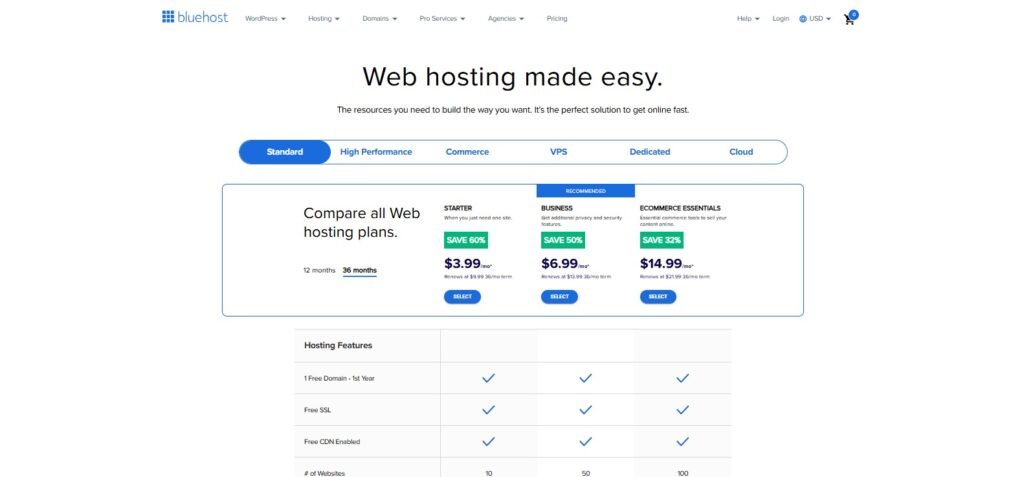
Bluehost is highlighted in reviews as offering NVMe storage in their hosting plans, including shared, VPS and dedicated tiers.
Strengths:
- Officially recommended by WordPress.org, good for WP-users. Clear labelling of “NVMe 4, NVMe 8” etc for VPS plans.
Weaknesses: - For smaller plans storage may still be limited (e.g., 10 GB NVMe mentioned) for lightweight sites.
- Shared account performance may still depend on other factors (CPU/RAM) beyond storage type.
Verdict: Strong option if you want a mainstream brand, good WordPress support and NVMe capability. For large media sites or heavy dynamic apps you may need higher tiers.
3. HostArmada & Verpex – NVMe Specialists
In a review of “Best NVMe Hosting Providers of 2025”, HostArmada and Verpex are both mentioned for delivering high-performance NVMe storage with robust features.
Strengths:
- Focused on NVMe storage across shared, reseller, VPS tiers.
- Daily backups, strong uptime claims, performance oriented.
Weaknesses: - Possibly higher cost than basic SSD plans.
- May require more technical fluency for best results (configuration, caching etc).
Verdict: Ideal for users who already expect medium to high traffic, or run resource-heavy sites (media, e-commerce, apps) and want NVMe performance from the start.
4. Other Notable Mentions
- The service directory “Web Hosting Services with SSD NVMe” lists many providers across 200+ companies, showing this is now a mainstream offering.
- When selecting any host, ensure the storage medium is truly NVMe, not just “SSD” labelled but slower hardware underneath.
Decision Guide: Which Provider for Which Use Case
| Use Case | Recommended Provider | Why |
|---|---|---|
| Budget NVMe hosting for small/medium site | Hostinger | Best cost-to-performance with NVMe support |
| WordPress, trusted brand, moderate growth | Bluehost | Good WP integration + NVMe options |
| High-performance / media-rich site | HostArmada / Verpex | Specialist NVMe, strong resources |
| Enterprise / very large traffic | May need dedicated NVMe + custom infrastructure | Custom solution beyond basic shared/VPS |
Pro Tip for Choosing Your Plan
- Confirm the storage is NVMe (look for “NVMe SSD”, “PCIe NVMe”, etc).
- Ask for or look up I/O / latency benchmarks if available (some review sites show faster load times with NVMe).
- Compare CPU & RAM — NVMe storage helps only if other resources are adequate.
- Check the upgrade path — ensure you can move to higher tiers as needed without painful migration.
- Confirm renewal pricing and whether NVMe features persist at higher cost or downgrade after promo period.
Final Checklist & Decision Framework (2025 Edition)
Start With Your Use Case, Not the Buzzword
“NVMe” sounds impressive — but it must match your project scale.
Before you pick a plan, answer these:
Is your website static, or does it handle thousands of database queries (WordPress, WooCommerce, portfolio)?
Do you store large files — images, videos, maps, or backups?
Are your visitors global or local?
Your workload determines whether you need shared SSD, NVMe VPS, or cloud infrastructure.
✅ Rule of thumb:
Always buy one level higher than your current need if you plan to scale. A slightly over-provisioned NVMe plan costs less than a migration later.
Technical Minimums to Demand in 2025
| Category | Minimum | Recommended (for performance-sensitive sites) |
|---|---|---|
| Storage Type | NVMe SSD (PCIe 3.0) | NVMe 4.0 or 5.0 with dedicated I/O |
| CPU & RAM | 2 vCPU / 4 GB RAM | 4 vCPU / 8 GB RAM+ |
| Bandwidth | 100 GB / month min | Unmetered or ≥ 1 TB with CDN |
| Uptime SLA | 99.9 % | 99.99 % with status monitoring |
| PHP / HTTP | PHP 8.2 +, HTTP/3 | Latest stable versions |
| Backups | Weekly | Daily + off-site snapshot |
| CDN & Caching | Optional | Built-in + LiteSpeed / Redis |
| SSL / Security | Let’s Encrypt + WAF | Edge WAF + 2FA + bot protection |
If a host hides these details, that’s a red flag — transparency defines reliability.
Long-Term Hosting Health Plan
Hosting is not “buy-and-forget.”
To keep performance high and prevent hidden costs:
Every Month
Benchmark page speed (GTmetrix, PageSpeed Insights).
Check uptime via UptimeRobot.
Clean unused media, plugins, and cache.
Every Quarter
Review storage and bandwidth usage; upgrade if > 80 % capacity.
Verify backup integrity (restore to a test subdomain).
Check CDN hit ratio and image optimization efficiency.
Every Year
Re-evaluate hosting pricing vs. performance.
Verify you’re still on NVMe infrastructure — hosts sometimes downgrade hardware silently.
Renew SSL, update PHP, and audit all plugins/themes.
Red Flags to Watch Before Buying
“Unlimited SSD storage” claims — there’s always a hidden limit.
No mention of PCIe or NVMe version — could be SATA SSD marketed as “NVMe-style.”
Low CPU or RAM caps — NVMe speed wasted if compute power throttled.
No off-site backups — one breach can erase everything.
No scalability path — forces painful migrations when traffic grows.
If any two of these appear, skip that host.
Performance Optimization Pairings
To extract full speed from NVMe:
Use LiteSpeed Cache or WP Rocket for server-side caching.
Activate Cloudflare/BunnyCDN for global delivery.
Convert images to WebP/AVIF before upload.
Use a plugin like Perfmatters to delay JS and control lazy-loading.
Implement object caching (Redis/Memcached).
These tools ensure your hosting hardware’s power translates into real-world performance.
Cost vs. ROI: The Smart Approach
Premium NVMe hosting (like Verpex / Kinsta) may cost 2–3 × shared SSD plans — but load time improvements often raise conversions, reduce bounce rate, and improve Google ranking.
For a content or affiliate site:
Every 0.5 s faster page load can increase revenue 5–10 %.
So don’t treat hosting as a cost — treat it as the engine that drives ROI.
Quick Decision Matrix
| Need | Best Choice | Rationale |
|---|---|---|
| Low-budget personal site | Hostinger NVMe Shared | Cheapest entry to NVMe hardware |
| Mid-tier WP blog or small e-commerce | Bluehost VPS NVMe | Reliable brand + scalable |
| Heavy traffic / media site | HostArmada NVMe VPS | Power + daily backups |
| Developer / cloud scaling | Verpex Cloud NVMe | Flexible resource allocation |
| Managed WordPress luxury | Kinsta / WPX NVMe Edge | 1-click scaling, global CDN |
Final Takeaway
In 2025, the Best Hosting with SSD Storage and NVMe Drives is no longer a luxury — it’s the baseline requirement for serious websites that care about speed, uptime, and SEO.
To summarize:
Confirm true NVMe hardware (PCIe 4.0 +).
Check total resource balance — CPU, RAM, bandwidth, caching.
Demand automated backups + CDN integration.
Monitor performance monthly and upgrade early.
Choose a host that’s transparent, scalable, and genuinely invested in infrastructure — not just marketing buzzwords.
Do this right, and your site will load blazingly fast, stay reliable under load, and rank higher — turning your hosting into a long-term competitive advantage.