Every photographer knows that in today’s digital-first world, having a stunning online portfolio is just as important as the art itself. Your photos may capture breathtaking landscapes, emotional weddings, or crisp product shots — but without the right online platform, your work risks being unseen. If you’re serious about showcasing your work online, finding the Best Hosting for Photographers Portfolio Site is the first step toward a professional presence.
Choosing the Best Hosting for Photographers Portfolio Site is more than just picking a place to upload images. You need a site builder that highlights your work, loads images quickly, looks professional, and is easy to maintain — without spending endless hours tweaking technical details.
In this guide, we’ll walk you through the best free and affordable website builders for photographers, highlight what features to look for, and give you clear comparisons. Whether you’re a beginner just starting out, a wedding photographer building a client gallery, or a professional artist ready to monetize your work, this article will help you find the perfect platform.
What We Look For in the Best Website Builders for Photographers
Before jumping into the list of free and premium website builders that qualify as the Best Hosting for Photographers Portfolio Site options. Not every platform is created equal, and photographers often have unique needs compared to bloggers, e-commerce owners, or businesses. Here are the most important factors we’ve considered:
1. Beautiful Photography Templates
A portfolio site should reflect your creative vision. Clean, modern, and visually driven templates allow your images to shine without unnecessary distractions. The best platforms offer photography-focused templates optimized for galleries, fullscreen images, and slideshows.
2. Image Quality & Speed Optimization
“Large image files can slow down a website drastically, so the Best Hosting for Photographers Portfolio Site should include CDN and image optimization. Good builders use automatic image compression, lazy loading, and CDN (Content Delivery Network) integration to ensure your photos look sharp but load fast — vital for both SEO rankings and user experience.
3. Ease of Use
Many photographers are not web developers. A drag-and-drop editor, intuitive interface, and pre-built blocks for galleries or blogs are essential. The goal is to help you launch quickly without needing coding knowledge.
4. Mobile Responsiveness
More than 60% of visitors browse from mobile devices. A photography website must be mobile-friendly, with templates that automatically adapt to screens of all sizes. This also impacts your Google rankings.
5. SEO Tools
No matter how good your photos look, they won’t help you grow if nobody finds your site. The best platforms include SEO settings like alt text for images, metadata, site maps, and integration with Google Analytics or Search Console.
6. Free vs. Paid Options
While many photographers start with free builders, most eventually upgrade for features like a custom domain name, unlimited storage, and ad-free experience. We’ll highlight both free and affordable plans so you can start smart and scale later.
7. E-Commerce & Client Galleries
If you plan to sell prints or digital downloads, you’ll need e-commerce tools. For client photographers (weddings, portraits, events), features like password-protected galleries and easy downloads make life easier for both you and your clients.
Quick Look at Our Best Free Website Builders for Photographers
Finding the Best Hosting for Photographers Portfolio Site can feel overwhelming — but the good news is, there are plenty of free and affordable tools that let you start showcasing your work immediately.
Here’s a quick look at the top free website builders for photographers we’ll cover in detail:
1. Wix – The Best Selection of Photography Website Templates

Wix is one of the most popular choices for photographers because of its huge template library. With over 60+ photography-specific templates, you can quickly create a professional-looking portfolio. It also offers drag-and-drop editing, integrated SEO tools, and built-in galleries.
Best for: Photographers who want design freedom and plenty of visual options.
2. SITE123 – The Most Beginner-Friendly Builder for Photographers
If you’re new to creating websites and want a fast, no-hassle setup, SITE123 is perfect. It uses pre-built layouts, making it easy to add galleries, blogs, or contact pages. The free plan is limited but works well for beginners who just want to get started.
Best for: Complete beginners who want a simple and guided building process.
3. Webador – Best for Building a Minimalist Photography Site
Webador focuses on minimalist, clean design — perfect for photographers who want their images to take center stage. The builder is easy to use, offers free hosting, and provides modern gallery layouts. While customization is limited, it’s ideal for those who prefer simplicity.
Best for: Minimalist photographers who want a sleek, distraction-free portfolio.
4. Squarespace – Beautiful Templates for Showcasing Photography Works

Squarespace is known for its award-winning templates, especially for creative professionals. Photographers love its full-screen slideshows, grid layouts, and blogging features. While it doesn’t have a free plan, its trial and affordable entry plan make it one of the most polished options available.
Best for: Professional photographers who prioritize design aesthetics.
5. Hostinger Web Builder – AI Tools for Building Photography Sites Quickly

Hostinger’s AI-powered builder makes it super easy to create a site in minutes. Simply answer a few questions, and the builder generates a photography site tailored to your style. Plus, Hostinger provides fast hosting, affordable pricing, and reliable performance.
Best for: Photographers who want speed and automation in building their site.
6. IONOS – Budget-Friendly Option for Photographers
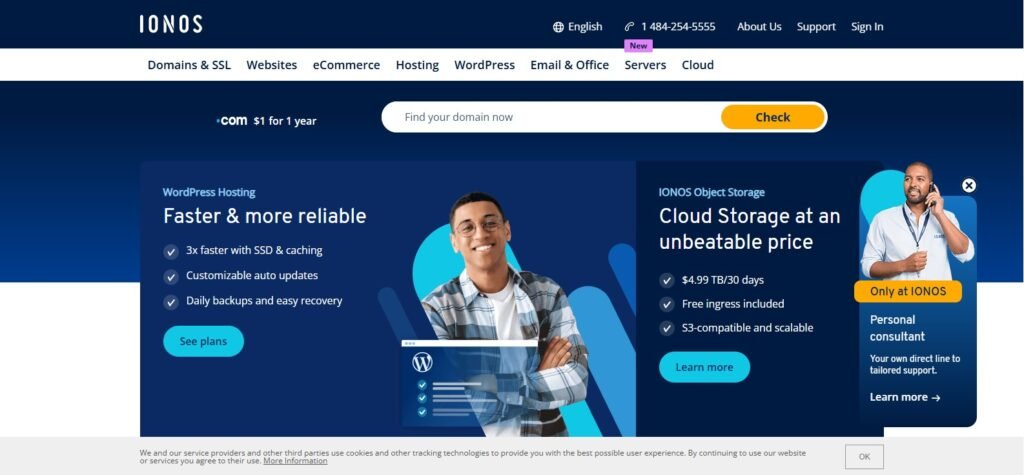
IONOS offers some of the cheapest hosting and site-building tools on the market. It’s perfect for photographers who want a professional-looking site without spending much. While templates are limited compared to Wix or Squarespace, its low-cost hosting and business tools make it a strong choice.
Best for: Budget-conscious photographers who still want professional hosting.
1. Wix: The Best Selection of Photography Website Templates
When it comes to building a photography portfolio website, Wix is often the first name that comes up — and for good reason.
Wix offers over 900 templates, including more than 60 specifically designed for photographers. Whether you’re a wedding photographer, a travel blogger, or a fine art creator, Wix has a ready-made design that aligns with your style.
Key Features:
Drag-and-drop editor – No coding required. You can position images, galleries, and text exactly how you want.
Photo galleries & slideshows – Full-screen galleries, grid layouts, and video backgrounds help your portfolio stand out.
Wix ADI (Artificial Design Intelligence) – If you’re in a rush, answer a few questions and Wix ADI creates a photography site automatically.
SEO-friendly tools – Add alt text to photos, customize meta descriptions, and connect easily with Google Analytics.
App marketplace – Over 300 apps, including client booking tools, print-on-demand integrations, and image watermarks.
Pros:
✔️ Huge variety of templates.
✔️ Strong customization options.
✔️ E-commerce features (sell prints directly).
Cons:
❌ Free plan shows Wix ads.
❌ Loading times can slow down with too many high-resolution images.
Best for: Photographers who want creative freedom, advanced features, and professional templates.
2. SITE123: The Most Beginner-Friendly Builder for Photographers
Not every photographer wants to spend hours customizing templates. Some just need a simple, clean site that’s ready in minutes. That’s where SITE123 shines.
SITE123 is built with simplicity in mind. You don’t drag and drop elements freely — instead, you choose from structured layouts. This means fewer design decisions, but also less overwhelm.
Key Features:
Step-by-step guided setup – Perfect for beginners.
Photography gallery layouts – Pre-designed sections for displaying images in grids or carousels.
Free hosting + SSL – Even the free plan includes security and hosting.
Basic SEO settings – Title tags, meta descriptions, and simple analytics integration.
Pros:
✔️ Extremely easy for beginners.
✔️ Quick setup (can build a site in under an hour).
✔️ Free hosting included.
Cons:
❌ Limited design flexibility compared to Wix or Squarespace.
❌ Not ideal for photographers who want advanced features.
Best for: Beginners who want a hassle-free setup and a functional photography portfolio without needing design experience.
3. Webador: Best for Building a Minimalist Photography Site
Some photographers prefer to let their work speak for itself. Webador is designed exactly for that — a minimalist builder with clean, modern layouts.
Unlike Wix, Webador doesn’t overwhelm you with hundreds of templates. Instead, it focuses on simplicity and speed.
Key Features:
Minimalist gallery templates – Clean layouts with large images and whitespace.
Free hosting + subdomain – Great for beginners.
Drag-and-drop editing – Easier than WordPress but more flexible than SITE123.
Built-in blogging tools – Useful if you want to share behind-the-scenes stories or photography tutorials.
Pros:
✔️ Lightweight and fast-loading.
✔️ Easy to use with drag-and-drop design.
✔️ Great for showcasing minimalist photography portfolios.
Cons:
❌ Limited template options.
❌ Not as feature-rich as Wix or Squarespace.
Best for: Photographers who want a clean, fast, distraction-free portfolio site.
4. Squarespace: Beautiful Templates for Showcasing Photography Works
Squarespace has built its reputation as one of the Best Hosting for Photographers Portfolio Site solutions for creative professionals — especially photographers, designers, and artists.
It offers some of the most visually stunning templates in the industry, with full-screen galleries, cinematic scrolling, and typography designed to highlight images.
Key Features:
Award-winning templates – Designed specifically for creative portfolios.
Integrated photo galleries – Grid layouts, full-width slideshows, and lightbox displays.
Blogging & storytelling – Perfect for photographers who also write about their creative journey.
E-commerce support – Sell prints, digital downloads, or even photography courses.
SEO & analytics tools – Built-in Google-friendly optimization tools.
Pros:
✔️ Best-in-class design templates.
✔️ Strong blogging and storytelling features.
✔️ E-commerce ready.
Cons:
❌ No permanent free plan (only free trial).
❌ Learning curve for full customization.
Best for: Professional photographers who want a high-end, polished online presence.
5. Hostinger Web Builder: AI Tools for Building Photography Sites Quickly
Hostinger is best known for its cheap web hosting, but its website builder is quickly becoming a strong competitor.
With AI-powered design tools, you can create a photography site in just a few minutes. This makes it ideal for photographers who want to skip the manual design process.
Key Features:
AI website generator – Creates a portfolio site instantly after answering a few prompts.
Fast hosting – Hostinger is one of the fastest hosting providers in the industry.
Affordable plans – Some of the lowest prices for hosting + builder packages.
SEO-friendly tools – Sitemap, meta tags, and analytics integration.
Pros:
✔️ Extremely fast setup with AI.
✔️ Cheap pricing compared to Squarespace or Wix.
✔️ Reliable hosting performance.
Cons:
❌ Limited templates compared to Wix.
❌ Not as polished for advanced portfolio customization.
Best for: Photographers who value speed, automation, and affordability.
6. IONOS: Budget-Friendly Option for Photographers
If your main priority is low cost, IONOS is worth considering. It combines website building tools with professional-grade hosting at some of the cheapest prices on the market.
Key Features:
Affordable pricing – Plans start at just a few dollars per month.
Basic templates – Simple but effective designs for portfolios.
Hosting + domain included – You don’t have to buy separately.
SSL certificate included – Security for both you and your visitors.
Pros:
✔️ Cheapest option for photographers.
✔️ Good hosting reliability.
✔️ Domain and SSL included in pricing.
Cons:
❌ Fewer templates compared to competitors.
❌ Limited design freedom.
Best for: Photographers who want a professional site on a tight budget.
Best Free Photography Website Templates
Having the right template can make or break your portfolio. Even if you choose the right platform, a poorly designed template can distract from your photography or make your site feel outdated.
The best free photography website templates share some common traits:
Full-screen image displays – To maximize visual impact.
Grid and masonry layouts – For neatly organizing large portfolios.
Whitespace balance – Minimal distractions so the focus remains on the photos.
Typography harmony – Clean, professional fonts that complement imagery.
Responsive design – Templates that automatically adjust to desktops, tablets, and mobiles.
Examples of Great Free Photography Templates:
Wix “Photographer Portfolio” Template – Full-screen hero images and grid gallery.
Squarespace “Avenue” Template – Minimalist grid-based layout ideal for large collections.
WordPress “Photography Blog” Themes – Clean blog + gallery mix for storytelling photographers.
SITE123 “Photo Studio” Layout – Simple structure for beginners to get started fast.
???? Pro Tip: When choosing a template, always preview it on desktop and mobile. A design that looks great on a big screen might feel cramped on a phone if not optimized.
Other Notable Free Website Builders for Photographers
While Wix, Squarespace, and others dominate the market, there are several other excellent platforms built specifically for photographers. These often focus more on client galleries, image protection, and selling prints. Let’s look at some strong alternatives.
7. Pixpa
Pixpa is designed with creative professionals in mind, especially photographers, artists, and designers. Unlike generic builders, it includes portfolio templates, client-proofing tools, and e-commerce features right out of the box.
Key Features:
Client galleries – Create private, password-protected galleries for clients.
E-commerce tools – Sell prints, digital downloads, or services directly.
Drag-and-drop editor – Easy to customize layouts.
SEO optimization – Built-in tools for image alt text and sitemaps.
Pros:
✔️ Built specifically for photographers.
✔️ Includes client proofing tools (a big win for professionals).
✔️ Affordable pricing compared to Squarespace.
Cons:
❌ Free plan is limited; best features require a paid upgrade.
❌ Fewer third-party app integrations than Wix.
Best for: Photographers who need client-proofing and online sales in one platform.
8. SmugMug
SmugMug is another photographer-focused platform, especially popular among wedding and event photographers. It focuses on image hosting, client galleries, and print sales.
Key Features:
Unlimited photo uploads – No storage limits (great for large portfolios).
Password-protected galleries – Secure delivery for clients.
E-commerce store – Sell prints and framed art directly.
High-quality hosting – Photos maintain resolution and sharpness.
Pros:
✔️ Unlimited storage.
✔️ Strong print-selling integration.
✔️ Tailored for professional photographers.
Cons:
❌ No permanent free plan (only a 14-day trial).
❌ Templates are functional but not as stylish as Squarespace.
Best for: Photographers focused on selling prints and delivering client galleries.
9. Zenfolio
Zenfolio is very similar to SmugMug but with more marketing and client-management tools. It’s ideal for photographers who want to manage bookings, sales, and portfolios in one system.
Key Features:
Portfolio + business tools – Combines galleries with client booking.
Smart photo upload – Automatically organizes large collections.
Sales integration – Sell packages, prints, and digital files.
Mobile optimization – Great for client viewing on smartphones.
Pros:
✔️ Tailored to working photographers with business features.
✔️ Streamlined client booking and sales process.
✔️ High-quality templates designed for photography.
Cons:
❌ No fully free plan (trial only).
❌ Less flexibility than Wix for creative design.
Best for: Professional photographers who need an all-in-one portfolio and business platform.
10. WordPress.com
WordPress.com is one of the most flexible website platforms in the world. While it isn’t photography-specific, its massive collection of free themes and plugins makes it a top choice for those who want full control.

Key Features:
Thousands of free and paid themes – Many built specifically for photographers.
Plugins for galleries and SEO – Add features like lightbox displays, watermarks, and advanced SEO.
Blogging integration – Perfect for storytelling alongside images.
Free hosting on WordPress subdomain – Great for beginners, with optional upgrades.
Pros:
✔️ Most customizable platform.
✔️ Huge theme and plugin ecosystem.
✔️ Free plan available with upgrade potential.
Cons:
❌ Slight learning curve for beginners.
❌ Some features (custom domains, advanced SEO) require a paid plan.
Best for: Photographers who want flexibility, blogging, and control over their site’s design and features.
Which Free Website Builder for Photographers is Right for You?
By now, you’ve seen that there’s no one-size-fits-all solution for photographers. The right website builder depends on your photography style, technical comfort level, and business goals. To help you decide, let’s break down the scenarios.
✅ If You Want Creative Freedom & Stunning Templates → Choose Wix
Wix is perfect if you love experimenting with layouts and want access to hundreds of templates. Wedding photographers, fashion photographers, and lifestyle bloggers often prefer Wix because it allows them to customize every detail without coding.
???? Best for: Photographers who want a personalized site with design flexibility.
✅ If You’re a Beginner with Zero Tech Skills → Choose SITE123
SITE123 is for those who just want a clean, working site without any design stress. If you only need a basic portfolio with galleries and a contact page, this builder will get you online fast.
???? Best for: Beginners, students, or hobby photographers starting out.
✅ If You Love Minimalist Aesthetics → Choose Webador
For photographers who prefer clean, distraction-free portfolios, Webador is a great fit. If your art is about subtle storytelling, Webador’s minimalist templates won’t compete with your photos.
???? Best for: Fine art photographers and minimalists.
✅ If You Want a High-End, Polished Portfolio → Choose Squarespace
Squarespace is the platform of choice for professional creatives who want their site to look like an art gallery. It’s also great for photographers who plan to blog, sell prints, or showcase creative projects with style.
???? Best for: Professional photographers focused on branding and design.
✅ If You Need Speed & Affordability → Choose Hostinger Web Builder
If you want to get your site live fast and don’t want to spend much, Hostinger’s AI builder is a game-changer. It’s simple, budget-friendly, and runs on one of the fastest hosting providers out there.
???? Best for: Freelance photographers on a budget who want speed.
✅ If You’re Price-Sensitive → Choose IONOS
IONOS is the most budget-friendly option, making it ideal if you just need a basic professional site. While templates are limited, it’s hard to beat the value when you get hosting, SSL, and a domain included at low cost.
???? Best for: Budget-conscious photographers.
✅ If You Need Client Proofing & Print Sales → Choose Pixpa, SmugMug, or Zenfolio
If you’re a wedding or event photographer, client galleries and proofing are critical. Platforms like Pixpa, SmugMug, and Zenfolio offer password-protected galleries, sales integration, and unlimited photo storage.
???? Best for: Professional photographers working with clients and selling prints.
✅ If You Want Maximum Flexibility & Blogging → Choose WordPress.com
If you like full control over design and want to integrate blogging, SEO plugins, and marketing tools, WordPress.com is unbeatable. It has a steeper learning curve, but the flexibility is unmatched.
???? Best for: Photographers who want to combine a portfolio with blogging or marketing.
Quick Decision Table
Here’s how each platform ranks if you’re searching for the Best Hosting for Photographers Portfolio Site based on different priorities.
| Need / Priority | Best Choice | Why It’s Best |
|---|---|---|
| Stunning templates | Wix / Squarespace | Visual design freedom |
| Absolute beginner | SITE123 | Guided, simple setup |
| Minimalist site | Webador | Clean & distraction-free |
| Branding & high-end presence | Squarespace | Premium, polished look |
| Speed + affordability | Hostinger | AI setup, budget hosting |
| Cheapest hosting | IONOS | Low-cost packages |
| Client proofing & sales | Pixpa / SmugMug / Zenfolio | Client galleries + e-commerce |
| Flexibility + blogging | WordPress.com | Plugins, SEO, storytelling |
FAQs
1. Do I really need a website as a photographer?
Yes. Social media platforms like Instagram or Facebook are great for exposure, but they don’t replace a professional website. A photography portfolio site gives you full control, makes you look more credible, and helps clients find you through Google.
2. Are free website builders good enough for photographers?
Free website builders are a great way to start, especially if you’re experimenting. However, most free plans come with limitations such as storage caps, ads, or no custom domain. For serious photographers, upgrading to a paid plan is usually worth it.
3. Which website builder is best for selling photography prints?
If selling prints is your priority, SmugMug, Zenfolio, or Pixpa are ideal because they’re designed specifically for client galleries and e-commerce integration. Squarespace and Wix also allow selling but require more manual setup.
4. Can I connect my own domain name to a free plan?
Most free plans give you a subdomain (e.g., yourname.wixsite.com). To use your own domain (e.g., yourname.com), you’ll need a paid plan. Platforms like Wix, Squarespace, and Hostinger often include a free domain in their annual packages.
5. Will my photography site be mobile-friendly?
Yes — all the website builders we’ve mentioned provide responsive templates that automatically adjust to desktops, tablets, and phones. Always preview your site on mobile before publishing.
6. Which is better for SEO: Wix, Squarespace, or WordPress?
All three offer good SEO tools, but WordPress.com provides the most flexibility with plugins like Yoast SEO. Wix and Squarespace are also SEO-friendly, with built-in tools to optimize titles, meta descriptions, and image alt text.
7. How much storage do I need for a photography portfolio site?
It depends on how many images you plan to upload. For beginners, 5–10 GB is usually enough. Professionals who upload high-resolution galleries may need unlimited storage plans offered by SmugMug, Zenfolio, or Pixpa.
8. Can I switch platforms later?
Yes, but it can be tricky. While you can always move your domain, templates and site design don’t transfer easily. That’s why it’s important to choose the right builder from the start based on your long-term goals.
Conclusion: Build a Portfolio That Works for You
Your photography deserves to be seen — and the Best Hosting for Photographers Portfolio Site is your gateway to showcasing your art to the world.
Here’s the quick takeaway:
If you want freedom and style → Go with Wix or Squarespace.
If you want a simple beginner option → Pick SITE123 or Webador.
If you’re on a budget → Try Hostinger or IONOS.
If you need client galleries and print sales → Choose Pixpa, SmugMug, or Zenfolio.
If you want flexibility and blogging → WordPress.com is the best option.
The most important step is to get started now. Don’t let indecision stop you from building your portfolio. Even a simple site today is better than waiting months for a “perfect” site. You can always refine and upgrade later.
???? Ready to showcase your photography? Choose the website builder that fits your needs, launch your portfolio, and let the world see your art.