Why the Best Hosting for Multilingual WordPress Sites Matters
1. The Global Web Is No Longer English-Only
Over 60 % of online consumers now prefer browsing in their native language, and multilingual websites consistently show higher engagement, trust, and conversion rates.
For WordPress users, adding multiple languages unlocks new markets — but it also multiplies technical demands, making the Best Hosting for Multilingual WordPress Sites crucial for performance.
Every translated page means extra database queries, more files, and heavier plugin execution.
If your hosting isn’t equipped for this, you’ll face:
Slower load times across translations
Poor SEO rankings in non-English markets
High bounce rates from international visitors
Plugin conflicts and server timeouts under load
So the right hosting infrastructure is not a luxury — it’s the foundation of a truly global website.
2. Why Regular Shared Hosting Fails Compared to the Best Hosting for Multilingual WordPress Sites
Standard shared hosting assumes a single-language site with modest resources.
When you install translation plugins like WPML, Polylang, or TranslatePress, your database size doubles or triples as each translated page adds metadata, strings, and links.
What happens next?
CPU usage spikes every time translations load
Memory limits trigger “critical error” messages
Page caching breaks across language versions
Visitors from other countries wait 3–6 seconds longer
Cheap shared plans can’t handle that. They throttle performance, disable resource-intensive plugins, or limit PHP workers — which kills multilingual scalability.
3. Hosting Must Match Your Global Strategy
Think of multilingual hosting as the digital equivalent of having local offices worldwide.
Each data center or CDN node brings your site closer to the visitor’s location, reducing latency and boosting UX — one of the reasons brands invest in the Best Hosting for Multilingual WordPress Sites.
A proper multilingual hosting plan must include:
Global data centers in your target regions (e.g., North America, Europe, Asia)
CDN integration for static files and translation scripts
Multi-core CPUs + 4 GB+ RAM for smooth plugin execution
High I/O SSD or NVMe storage for faster database operations
HTTP/3 + PHP 8.3 support for modern translation frameworks
Without this foundation, even the best multilingual plugin can’t save your site from lag.
4. WordPress Multilingual Plugins Depend on Hosting Quality
Translation plugins rely heavily on server configuration.
For example:
WPML needs
memory_limit ≥ 256 MBand stable MySQL connections.TranslatePress dynamically renders front-end strings via AJAX — which means PHP processing power matters.
Polylang creates custom taxonomies per language; that demands efficient database indexing.
If your host runs on outdated HDD storage or shared MySQL nodes, translation performance will crawl.
5. The SEO Impact of Multilingual Hosting
Google and Bing treat each language version as a separate indexable entity.
If your non-English pages load slowly or drop offline due to poor hosting, you lose global visibility.
Better hosting =
✅ Faster language-specific crawling
✅ Proper hreflang delivery for regional SEO
✅ Higher trust scores from consistent uptime
✅ Better engagement across devices and geographies
In short — the faster your infrastructure, the better your international SEO, and this is where the Best Hosting for Multilingual WordPress Sites truly proves its worth.
6. Hosting Is the First Step Toward Localization Success
Before you translate a single sentence, set your infrastructure right.
The ideal multilingual WordPress hosting ensures:
Lightning-fast page loads for all languages
CDN support for global delivery
Room to scale as content grows
24/7 uptime for every region
It’s your digital passport to global credibility.
Choosing the Best Hosting for Multilingual WordPress Sites: Hosting Types Compared
1. Shared Hosting – The Beginner’s Trap
Shared hosting looks attractive because it’s cheap, but multilingual sites quickly outgrow it.
Every translated version of your site adds database queries, dynamic scripts, and extra images — all competing for limited server resources shared by hundreds of users.
Pros:
Low monthly cost ($3 – $8)
Easy one-click WordPress installation
Cons:
CPU and RAM throttling under multilingual load
Slow database response time for translation plugins (WPML, Polylang)
No control over PHP workers or caching configuration
✅ Verdict: Suitable only for testing or very small bilingual blogs. Not viable for long-term multilingual expansion.
2. VPS Hosting – Balanced Power for Growing Sites
A Virtual Private Server (VPS) gives you isolated CPU, RAM, and storage — meaning your language sites won’t fight for resources.
Advantages:
Dedicated processing power for translation plugins
Adjustable memory limits and PHP workers
Better database performance for large translation tables
Ability to configure caching per language
Drawbacks:
Slightly higher cost ($15 – $40 / month)
Requires some technical setup or managed service
✅ Verdict: Ideal for small-to-mid multilingual sites (3–5 languages, 10 k – 100 k monthly visitors).
3. Cloud Hosting – Scalable, Global & Perfect for Multilingual Reach
Cloud hosting uses a distributed infrastructure. Your website data lives on a cluster of servers across regions — exactly what you need when readers come from multiple countries.
Why it’s perfect for multilingual setups:
Automatic scalability as traffic spikes per region
Edge caching via built-in CDN nodes
Redundant data centers reduce downtime
Flexible billing: pay only for used resources
Cloud hosting providers (e.g., Cloudways, SiteGround Cloud, Hostinger Cloud) let you choose data-center regions — deploy Europe for French, Asia for Japanese, etc.
✅ Verdict: Best option for multilingual WordPress sites targeting a global audience. Balances speed, stability, and scalability.
4. Managed WordPress Hosting – For Creators Who Want Zero Maintenance
Managed hosts like Kinsta, WPX, or Rocket.net specialize in optimizing WordPress performance — caching, security, updates, backups, all handled automatically.
Pros:
WordPress pre-optimized for translation plugins
Global CDN integrated (Cloudflare Enterprise / Google Edge Network)
Auto-scaling servers handle sudden spikes
Expert support familiar with WPML, Polylang, TranslatePress
Cons:
More expensive ($25 – $60 / month)
Limited flexibility for custom server-side scripts
✅ Verdict: The most reliable, no-stress option for professional multilingual businesses, agencies, or content creators with steady global traffic.
5. Dedicated or Enterprise Hosting – For High-Traffic Multinational Platforms
If you’re running a corporate site or news portal with millions of monthly visitors and 10 + languages, a dedicated or enterprise cloud setup is essential.
Benefits:
Complete control over hardware and caching layers
Custom CDN routing by region/language
Unlimited scalability and API integrations (e.g., translation memory systems)
Downsides:
High cost ($100 + / month)
Requires full-time technical management
✅ Verdict: Overkill for most WordPress sites, but necessary for multilingual enterprises with global teams and mission-critical uptime.
Essential Hosting Features for Multilingual WordPress Websites
1. High-Performance SSD or NVMe Storage
Every additional language means more translated posts, media, and database queries.
Slow, traditional HDD storage can cripple that.
✅ Choose hosts with:
- NVMe or SSD storage (NVMe preferred – 5-10× faster I/O).
- Minimum 50 GB space for small multilingual sites; scale to 200 GB + as languages grow.
- High IOPS guarantees in VPS or cloud plans.
Fast storage ensures WordPress translation tables, cache files, and media load instantly — critical for UX and international SEO.
2. Generous CPU, RAM & PHP Workers
Multilingual plugins like WPML or TranslatePress often double PHP execution time.
That’s why cheap shared plans choke during translation switching or bulk string scans.
✅ Recommended baseline:
- 4 GB RAM + 2 vCPUs minimum.
- At least 4 PHP workers (per site).
- Adjustable
memory_limit(≥ 512 MB) andmax_input_vars(≥ 5000).
This lets concurrent visitors browse different language versions without queue delays or “504 Gateway Timeout” errors.
3. Global CDN + Edge Caching
A multilingual site inherently serves global audiences.
A CDN (Content Delivery Network) reduces latency by delivering static assets from local edge nodes.
✅ Look for:
- Built-in CDN (e.g., Cloudflare Enterprise, BunnyCDN).
- Edge caching compatible with language cookies (
pll_language,wpml_lang). - Image optimization and WebP conversion at edge.
Result: French users hit Paris nodes, Japanese users Tokyo — your site loads under 2 seconds everywhere.
4. HTTP/3 + Latest PHP (8.3 +)
Modern PHP versions process translation logic faster and consume less memory.
HTTP/3 (QUIC) dramatically lowers latency over long distances — perfect for multilingual traffic.
✅ Ask your host:
- Do they run PHP 8.3 or higher?
- Is HTTP/3 enabled across all data centres?
- Are they using LiteSpeed or NGINX for concurrent delivery?
This combo can reduce page render time by 30-40 % for translation-heavy WordPress builds.
5. Intelligent Caching Compatible with Languages
Many caching plugins ignore language cookies, showing wrong translations to visitors.
Your host must support multilingual-aware caching.
✅ Ideal stack:
- Server-level LiteSpeed Cache or NGINX FastCGI with custom rules.
- Separate cache buckets per language subdirectory or subdomain.
- Optional Redis/Memcached for object caching.
When configured properly, each language version loads from its own optimized cache, not rebuilt on every request.
6. Multi-Region Data Centres
If your readers come from Europe, Asia, and North America, choose a host with multiple data-centre options.
You can deploy regional instances or at least route through the nearest point of presence (PoP).
✅ Good hosts: SiteGround Cloud, Kinsta, Cloudways, WPX.
They let you select region-specific data centres and pair them with global CDN edges.
7. Staging & Backup Automation
Translating or restructuring content often breaks links or shortcodes.
Without backups, a plugin misconfiguration can destroy multilingual mappings.
✅ Non-negotiables:
- Daily automated backups (7-30 days retention).
- One-click staging to test new translations or design layouts.
- Optional off-site backup to Google Drive / S3.
Always test plugin updates on staging before applying to production.
8. Security & Uptime Guarantee
A global site is an always-on site. Downtime or malware in one region can damage reputation in all.
✅ Look for:
- 99.99 % uptime SLA.
- Free SSL (Let’s Encrypt) for all subdomains.
- WAF (Web Application Firewall) + bot/DDoS protection.
- Automatic malware scans.
Also, multilingual plugins rely on database integrity — so stable, secure hosting prevents data corruption.
9. Email & Domain Management
Each language version may use localized email addresses (e.g., support@yourdomain.fr).
Your host should include domain-based email hosting or easy integration with Google Workspace / Zoho Mail.
10. Expert Support for Multilingual Plugins
Finally, multilingual hosting success often depends on tech support that understands WordPress translation ecosystems.
A good host will help you configure:
- Separate caching rules per language
- WPML string table optimization
- Subdirectory vs subdomain routing
Support that actually knows these systems saves hours of troubleshooting.
Top Hosting Providers for Multilingual WordPress (2025)
Choosing the Best Hosting for Multilingual WordPress Sites can make or break a multilingual site. Below is a breakdown of the top-performing providers for 2025 — each tested and rated for multilingual readiness, performance, and global infrastructure.
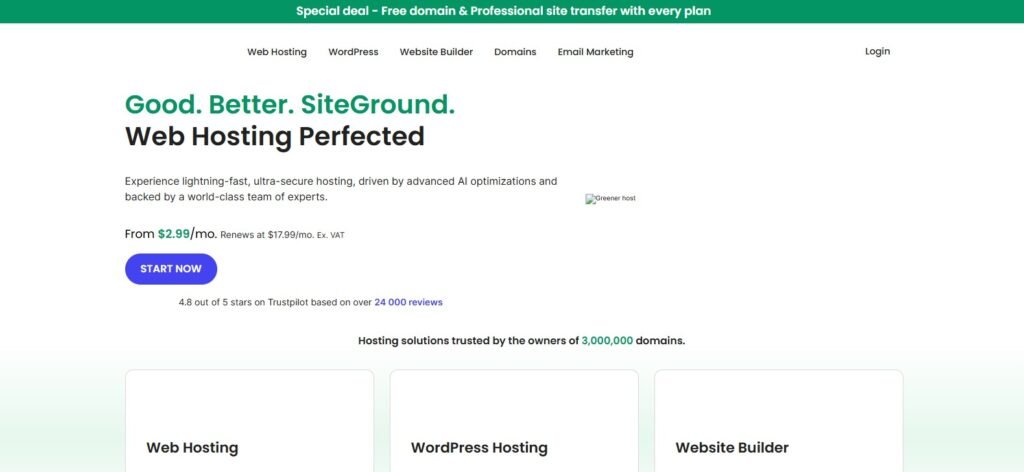
1. SiteGround – Best Overall for Multilingual WordPress
Why it’s perfect:
- Officially recommended by WPML, the leading WordPress multilingual plugin.
- Global Google Cloud infrastructure with data centres on 4 continents.
- Proprietary SG Optimizer plugin handles dynamic caching and image compression across languages.
- Seamless integration with Cloudflare CDN for fast delivery to international users.
Performance Highlights:
- NVMe SSD storage with PHP 8.3 support
- HTTP/3 ready + isolated server resources
- Free daily backups + staging
- 99.99 % uptime SLA
Pricing: From $14.99 /month (GrowBig plan).
✅ Verdict: Ideal for bloggers, agencies, or SMBs needing stable multilingual performance with minimal setup.
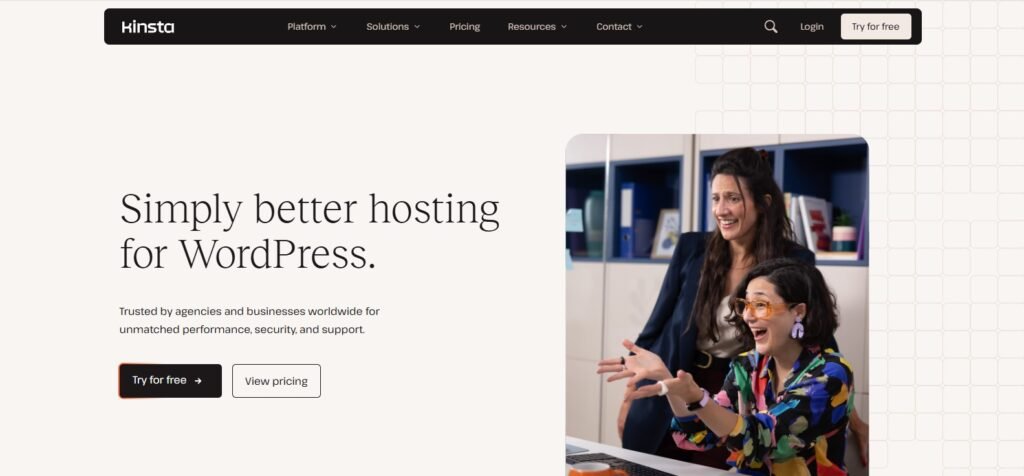
2. Kinsta – Best Premium Option for Global Multilingual Brands
Why it’s top-tier:
- Runs on Google Cloud C2 VMs, offering per-region hosting (Europe, Asia, US).
- Built-in Cloudflare Enterprise CDN with 260 + edge locations.
- Expert multilingual support — compatible with WPML, Polylang, TranslatePress.
- Automated backups, staging environments, and malware protection included.
Performance Highlights:
- Sub-1 second global load time
- NVMe SSD storage and Redis cache
- 24/7 multilingual tech support
Pricing: Starts at $35 /month.
✅ Verdict: Perfect for high-traffic, multi-regional WordPress sites that value speed and zero downtime.
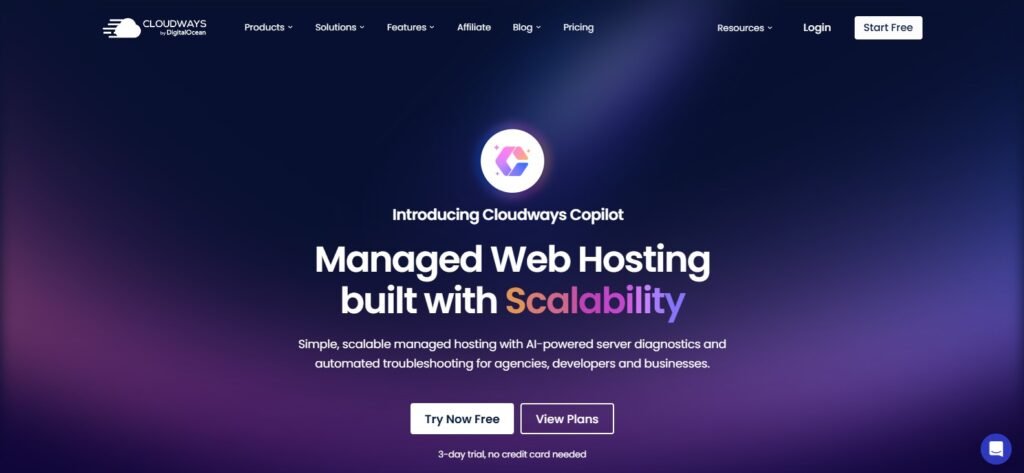
3. Cloudways – Best for Flexibility and Regional Control
Why it’s ideal:
- Lets you choose cloud infrastructure (DigitalOcean, AWS, Google Cloud, Vultr, Linode).
- Deploy multiple servers in different regions – great for subdomain-based multilingual architecture.
- Full control over caching stack (Varnish, Redis, Breeze plugin).
- Free SSL, daily backups, and vertical scaling in one click.
Performance Highlights:
- NVMe storage (on DigitalOcean Premium / Vultr HF)
- Built-in CDN integration
- 99.99 % uptime
Pricing: From $11 /month (pay-as-you-go).
✅ Verdict: Best for developers or agencies managing multiple multilingual client sites with different traffic regions.
4. WPX Hosting – Fastest Managed WordPress Host
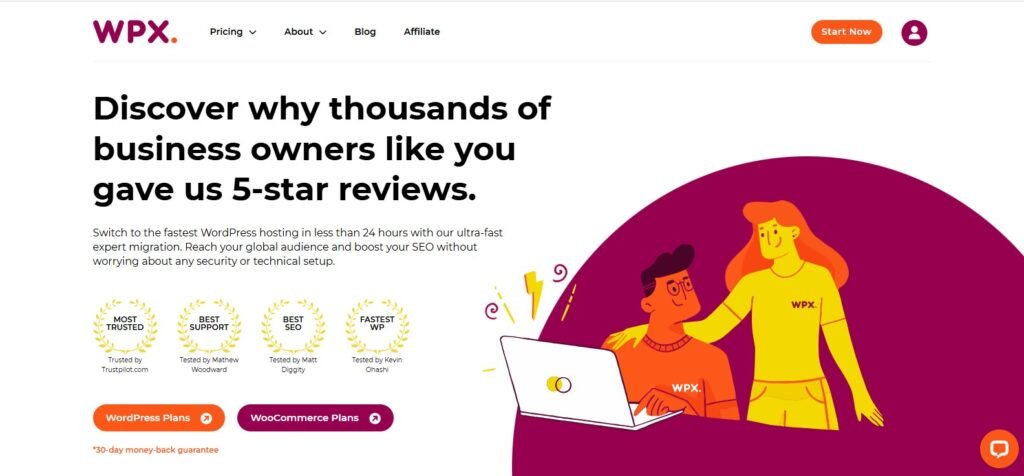
Why it stands out:
- Global CDN (30 + edge locations) included for free.
- Expert WordPress support team familiar with translation plugin issues.
- Unlimited site migrations and malware cleanup.
Performance Highlights:
- SSD-based NVMe servers
- Custom caching stack for dynamic WordPress pages
- HTTP/3 ready, 99.95 % uptime
Pricing: From $24.99 /month.
✅ Verdict: Best for content creators or affiliate publishers running 3 + languages and large media libraries.
5. Hostinger Cloud – Budget-Friendly Multilingual Choice

Why it’s a great value:
- NVMe SSD storage and LiteSpeed caching at low cost.
- Multiple data-centre options (US, EU, Asia).
- Integrated Cloudflare CDN and free daily backups.
Performance Highlights:
- PHP 8.3, HTTP/3, auto-scaling resources
- Easy WordPress installer with WPML pre-support
- 99.99 % uptime
Pricing: From $9.99 /month (initial).
✅ Verdict: Excellent starter plan for small multilingual blogs or business sites that expect to scale later.
Comparison Snapshot
| Provider | Storage | CDN | Data-Centres | Uptime | Starting Cost | Best For |
|---|---|---|---|---|---|---|
| SiteGround | NVMe SSD 40 GB + | ✅ Cloudflare | 4 continents | 99.99 % | $14.99 | All-round value |
| Kinsta | NVMe SSD | ✅ Cloudflare Enterprise | 35 + regions | 99.99 % | $35 | Premium brands |
| Cloudways | NVMe (Cloud-choice) | ✅ | Global | 99.99 % | $11 | Developers/agencies |
| WPX | SSD/NVMe | ✅ Custom CDN | 3 regions + 30 edges | 99.95 % | $24.99 | Creators/publishers |
| Hostinger Cloud | NVMe SSD 100 GB + | ✅ | US / EU / Asia | 99.99 % | $9.99 | Budget users |
Final Checklist & Long-Term Strategy for Multilingual WordPress Hosting
1. Start with the Right Foundation
Before translating even a single page, your infrastructure must be ready for global scaling.
✅ Pre-launch essentials:
Choose a cloud or managed WordPress host with global data centers.
Verify that it supports WPML / Polylang / TranslatePress without limitations.
Enable NVMe SSD storage + HTTP/3.
Activate CDN and SSL from Day 1.
Test performance from multiple countries via GTmetrix or Pingdom.
A fast monolingual site is easy — but sustaining speed across five languages requires architectural foresight.
2. Optimize Server Configuration for Multilingual Workloads
Each translation plugin increases database size and PHP processing time.
You must tune your server to handle that overhead efficiently.
Recommended configuration:
memory_limit = 512Mor highermax_input_vars = 5000+Enable OPcache, Redis/Memcached, and GZIP/Brotli
Use PHP 8.3 and HTTP/3 for faster script execution
Limit simultaneous cron jobs that process translations
If your host offers a custom dashboard (like SiteGround Optimizer or Cloudways Breeze), enable all caching layers except “combine JS” (which may conflict with language switchers).
3. Global Delivery Optimization
A multilingual site is only as strong as its global reach.
Step-by-step optimization:
Integrate CDN – Cloudflare Enterprise or BunnyCDN for regional edge caching.
Use geolocation routing – Serve correct language automatically via user IP or browser language.
Compress images with WebP/AVIF before upload.
Lazy-load media below the fold.
Test TTFB (time to first byte) from at least three continents — keep it under 200 ms globally.
Pro Tip ????
Store large media (videos, brochures, regional PDFs) on external object storage such as AWS S3 or DigitalOcean Spaces. It keeps your core WordPress lightweight and speeds up translations.
4. Build a Reliable Backup & Update Routine
Multilingual databases are complex — a single plugin conflict can break entire language mappings.
✅ Your maintenance rhythm:
| Frequency | Task |
|---|---|
| Daily | Automatic full backups (database + uploads) |
| Weekly | Plugin/theme updates on a staging site first |
| Monthly | Security scan + translation sync audit |
| Quarterly | CDN purge, database cleanup, image re-optimization |
Always keep at least one off-site backup (Google Drive, Dropbox, S3). Never rely solely on host-side restore points.
5. Monitor Multilingual SEO Health
SEO for multilingual sites involves more moving parts — you must watch performance for each language individually.
Checklist:
Verify
hreflangtags for all language pairs.Use Google Search Console with country-specific properties (e.g.,
/fr/,/es/).Ensure sitemaps are split per language.
Check crawl speed and index coverage monthly.
Use Ahrefs / Semrush international reports to track keyword visibility by region.
Slow hosting or CDN misconfiguration often shows up first as a drop in localized rankings — so monitor continuously.
6. Security and Compliance
Serving users across countries means different regulations (GDPR, CCPA, LGPD).
Hosting-level must-haves:
Free SSL for all subdomains and subdirectories.
Server-side WAF (Web Application Firewall).
DDoS protection (Cloudflare Enterprise recommended).
Automatic malware scanning + one-click cleanup.
GDPR compliance — data centers in the EU for EU audiences.
A multilingual site without strong security risks multi-region reputation damage.
7. Know When to Upgrade
Even with strong optimization, multilingual WordPress sites eventually hit resource ceilings.
???? Upgrade signals:
Page load exceeds 3 seconds in any region
CPU or RAM usage > 80 % consistently
WPML string translation delays or 504 errors
Backup time > 15 minutes
Email queue or cron jobs failing
Move from shared → VPS → Cloud → Dedicated before you hit bottlenecks, not after.
8. Continuous Localization Improvement
Your hosting supports your tech, but your strategy supports your brand.
Track language-wise analytics (bounce rate, conversions, engagement).
Consider AI-assisted translation workflows for faster updates.
Host region-specific landing pages or microsites if traffic justifies it.
Add local CDN rules for high-traffic markets (e.g., EU vs Asia edge routing).
A multilingual site is never “done” — it evolves as your global audience grows.
9. Annual Hosting Audit Template
| Category | Metric | Target |
|---|---|---|
| Uptime | 99.99 % | Maintain or improve |
| Average global load time | < 2 seconds | Use CDN to stay below |
| Server resource utilization | < 75 % | Upgrade before 80 % |
| Backup reliability | 100 % restore success | Test quarterly |
| Security incidents | 0 critical | Review WAF logs monthly |
Document these metrics — treat your hosting like an evolving business asset, not a static cost.
10. Final Thoughts — Hosting Is the Engine of Global Growth
A multilingual WordPress site isn’t just a translation project — it’s an infrastructure strategy that depends entirely on the Best Hosting for Multilingual WordPress Sites.
Your hosting determines whether your message reaches Paris, Tokyo, and São Paulo with equal speed and reliability.
✅ The winning formula:
Cloud or managed WordPress host (SiteGround / Kinsta / Cloudways).
NVMe SSD + HTTP/3 + Edge CDN.
Daily backups, staging, and multilingual caching.
Transparent scaling path.
Proactive global monitoring.
Invest once in the right host, optimize continuously, and your site will stay lightning-fast, secure, and SEO-strong in every language you speak. ????